

How to Choose Dining Chairs: Style, Size and Comfort Guide
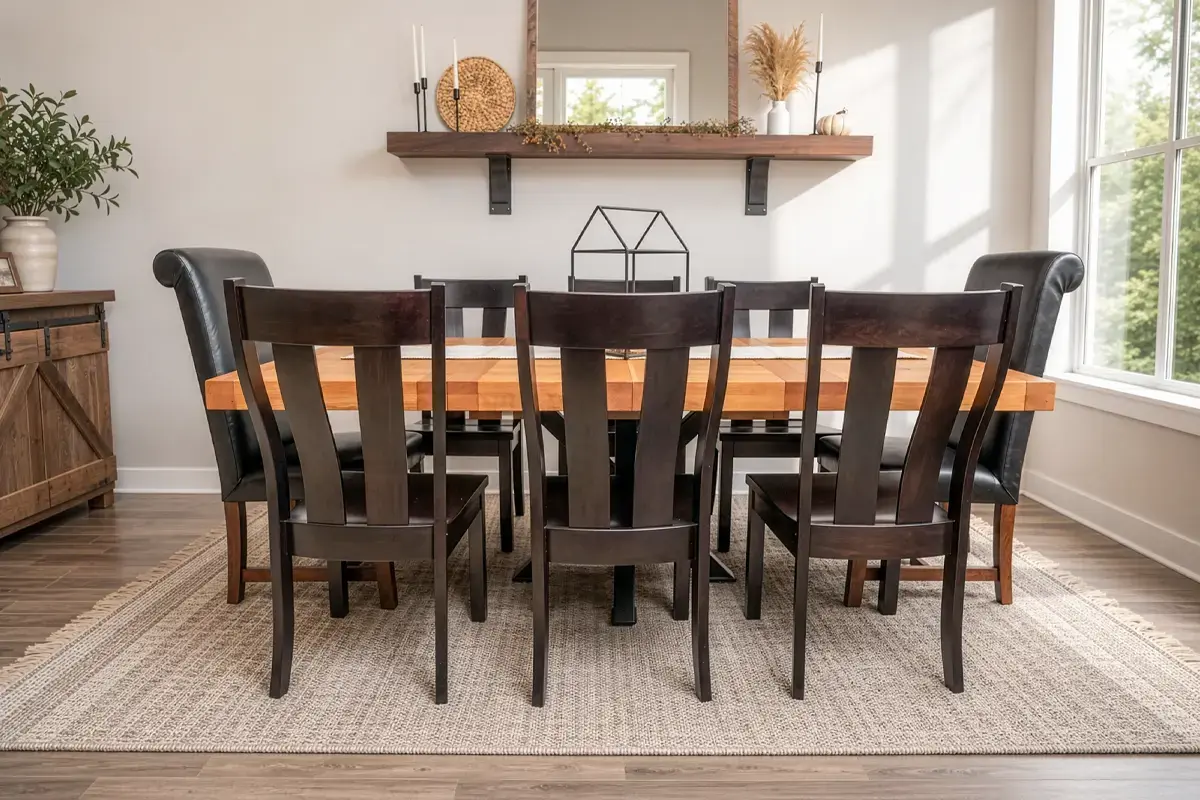
Dining chairs influence how your dining room looks, but comfort and fit matter just as much as style. The right chairs should provide proper legroom, fit around your table base, withstand everyday use, and feel comfortable through long meals and gatherings.
This guide explains how to compare chair sizes, back styles, materials, finishes, and seating arrangements so you can find chairs that work with both your table and the way you use your dining room.
To choose dining chairs, first measure the table height, apron clearance and usable space between the table legs. Then compare chair width, seat height, depth, arm height and back support. Finally, choose a material and style that suits how frequently the chairs will be used.
Choose the Right Chair Size
Even the most beautiful chair will feel wrong if its proportions do not work with your table.
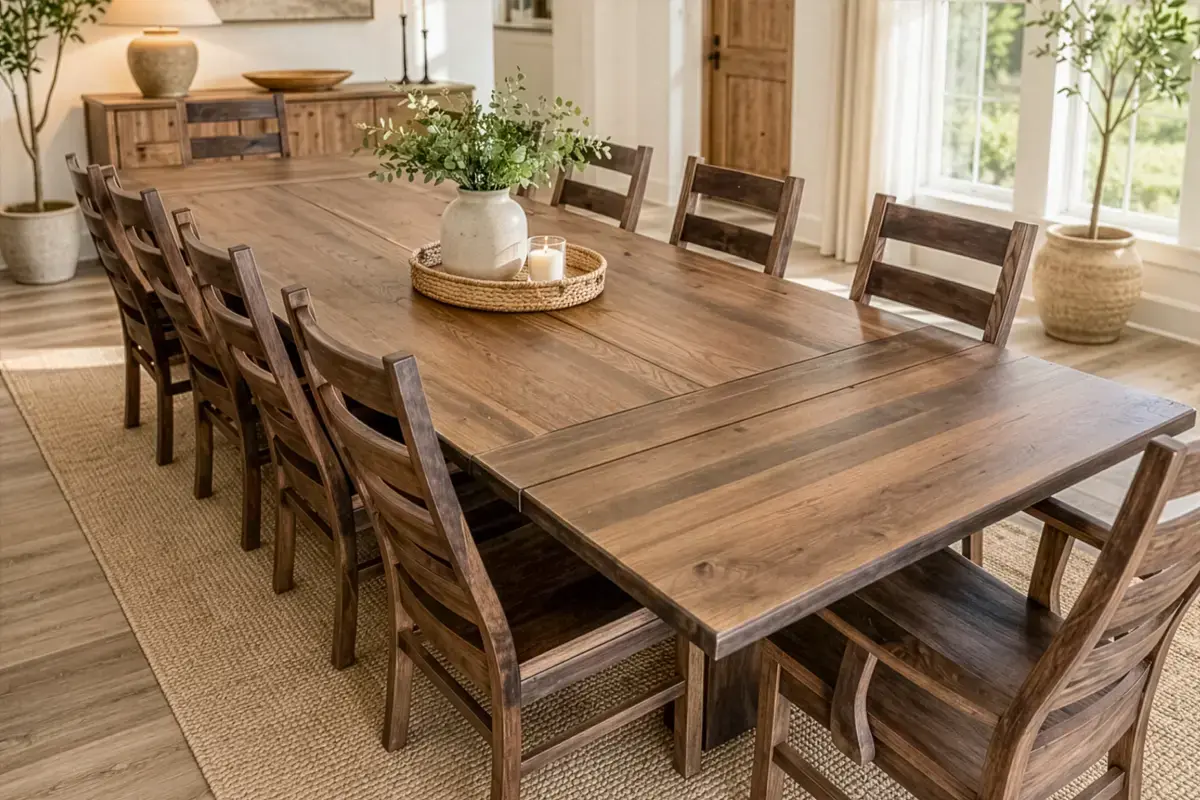
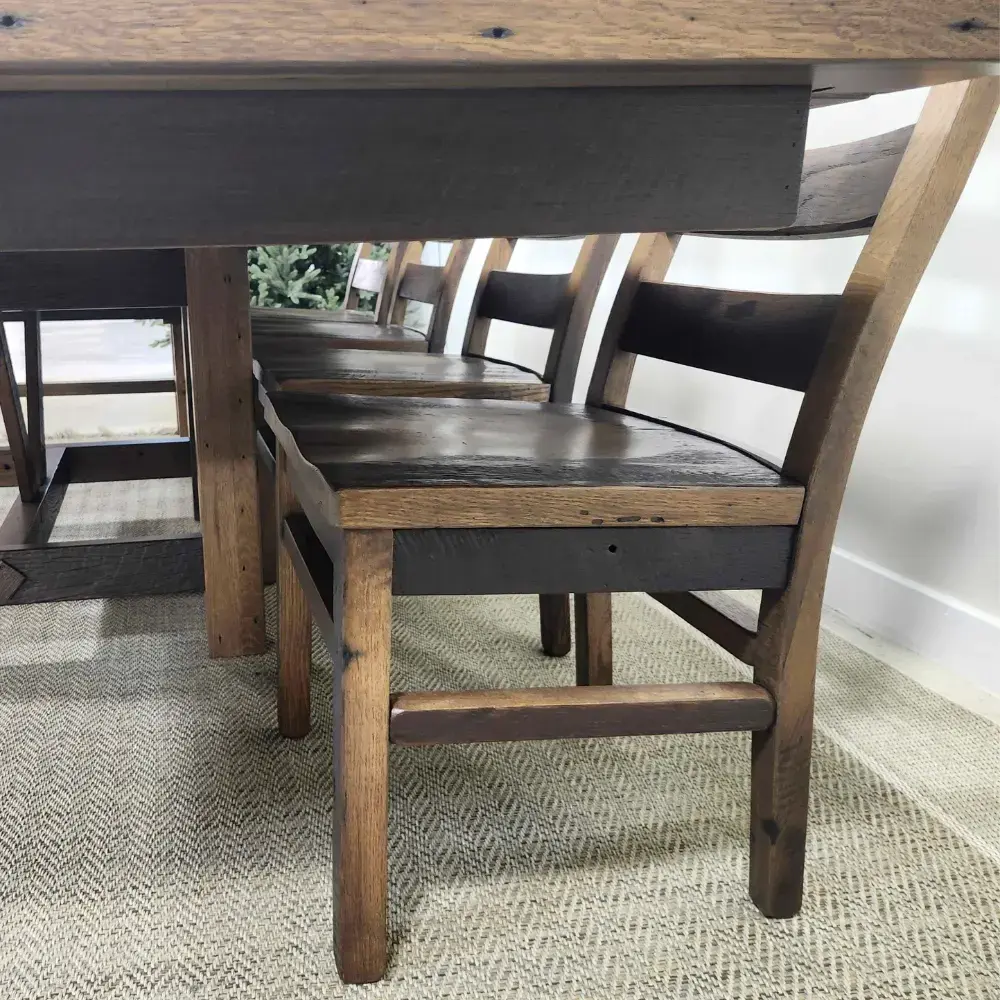
As a general guideline, aim for approximately 10 to 12 inches between the top of the chair seat and the underside of the table or apron—whichever is lower. This usually provides enough room to sit comfortably without feeling too low or too close to the table.
Also consider:
-
Chair width: Make sure every chair fits between the table legs or around the pedestal.
-
Spacing: Allow roughly six inches between chairs whenever possible.
-
Chair depth: Deeper upholstered chairs require more room behind the table.
-
Back height: Tall chairs create a more formal, substantial look. Lower backs make the room feel more open.
-
Arm height: Make sure chairs with arms can slide easily under the table.
-
Table extensions: Measure the table both with and without its leaves or extensions.
Don't forget to account for walking space. Guests should be able to pull out their chairs without hitting a wall, buffet, kitchen island, or another piece of furniture.
Find the Chair Style That Fits Your Room
Your chairs do not have to perfectly match your table, but they should feel connected to the overall look of the room. Begin by identifying the mood you want to create.
Ladder-Back Chairs: Warm and Welcoming
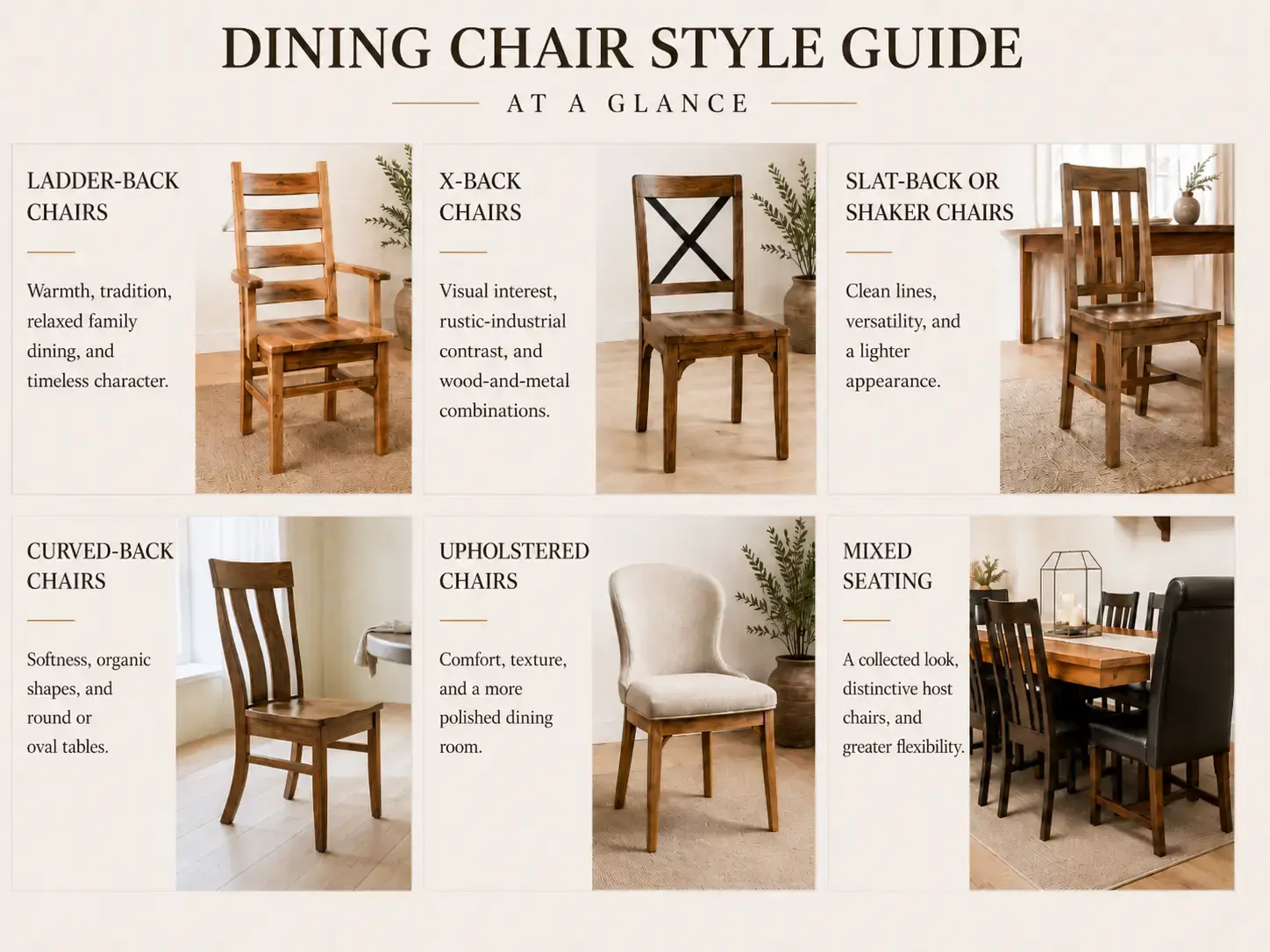
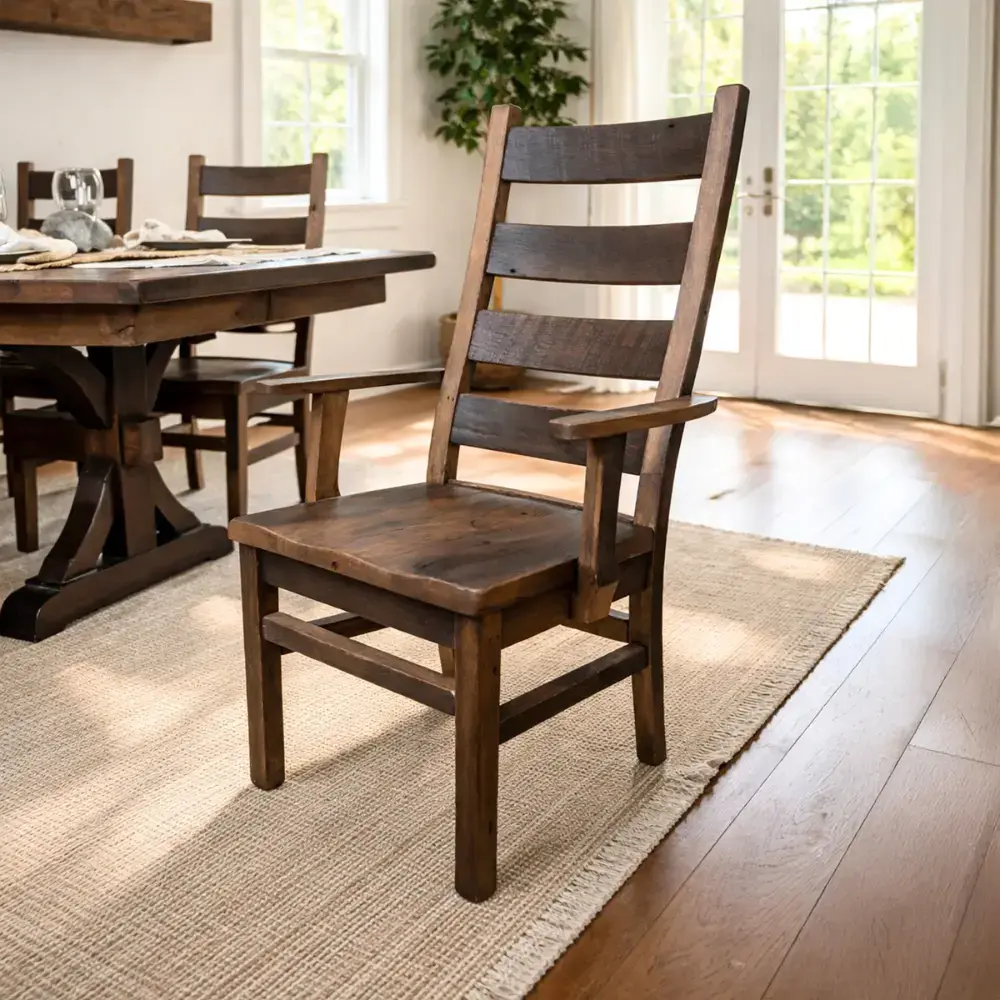
Ladder-back chairs are known for their horizontal back slats and familiar, inviting silhouette. They work especially well in relaxed dining spaces and rooms inspired by traditional, rustic, cottage, or casual design.
A ladder-back chair such as the Akron adds handcrafted warmth without making the room feel overly formal. Its strong silhouette complements substantial wood tables, while the open back keeps the arrangement from appearing too heavy.
The Akron is offered in side-chair and armchair configurations, allowing you to use matching chairs throughout the room or place armchairs at the ends of the table.
The Akron and Pathway (and similar) chairs are among the most comfortable dining chairs we offer. Their gently reclined backs and recessed, contoured seats help relieve pressure on the thighs and hips, making them comfortable enough for hours of sitting.
-Shaun, Lead Designer
Choose a ladder-back chair when you want:
A comfortable, familiar look
A warm and relaxed dining room
A chair that pairs naturally with solid or reclaimed wood
A timeless style that will not quickly feel dated
Curved-Back Chairs: Soft and Refined
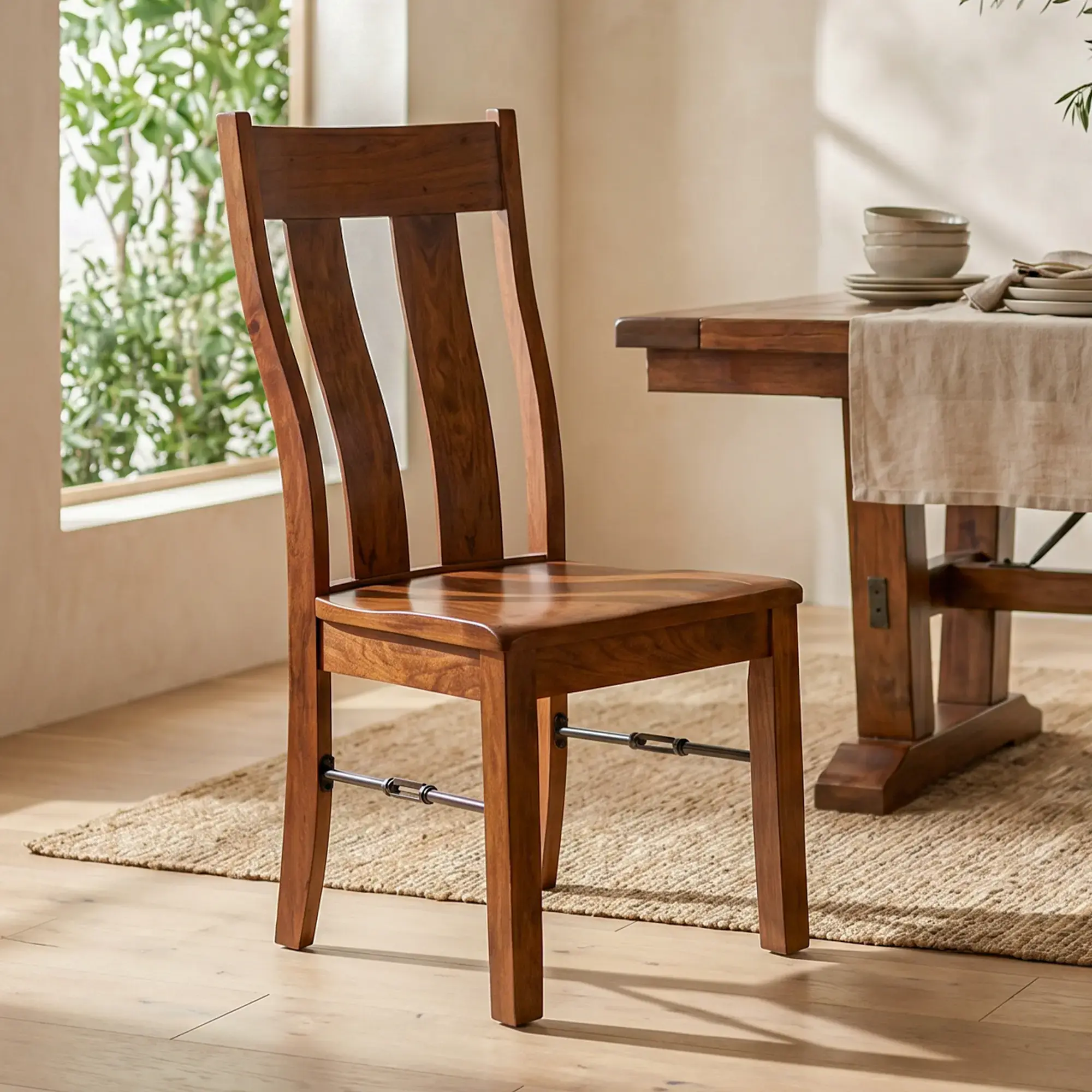
Not every dining room needs straight lines and strong angles. Curved-back chairs can soften a rectangular table, repeat the shape of a round table, or bring a more organic feeling to a room.
The Pathway and Holbrooke chairs are examples of curved-back designs within the collection. Their rounded forms can help a dining space feel more relaxed and visually balanced.
These [ladder-back and curved-back] chairs consistently exceed customers’ expectations. People often tell us they are among the most comfortable dining chairs they have ever sat in. For long family gatherings, game nights, holiday meals, or extra seating during the big game, these chairs are an excellent choice. -Shaun, Lead Designer
Choose a curved-back chair when you want:
A softer silhouette
A comfortable, embracing appearance
A chair for any table shape
X-Back Chairs: Character With Contrast
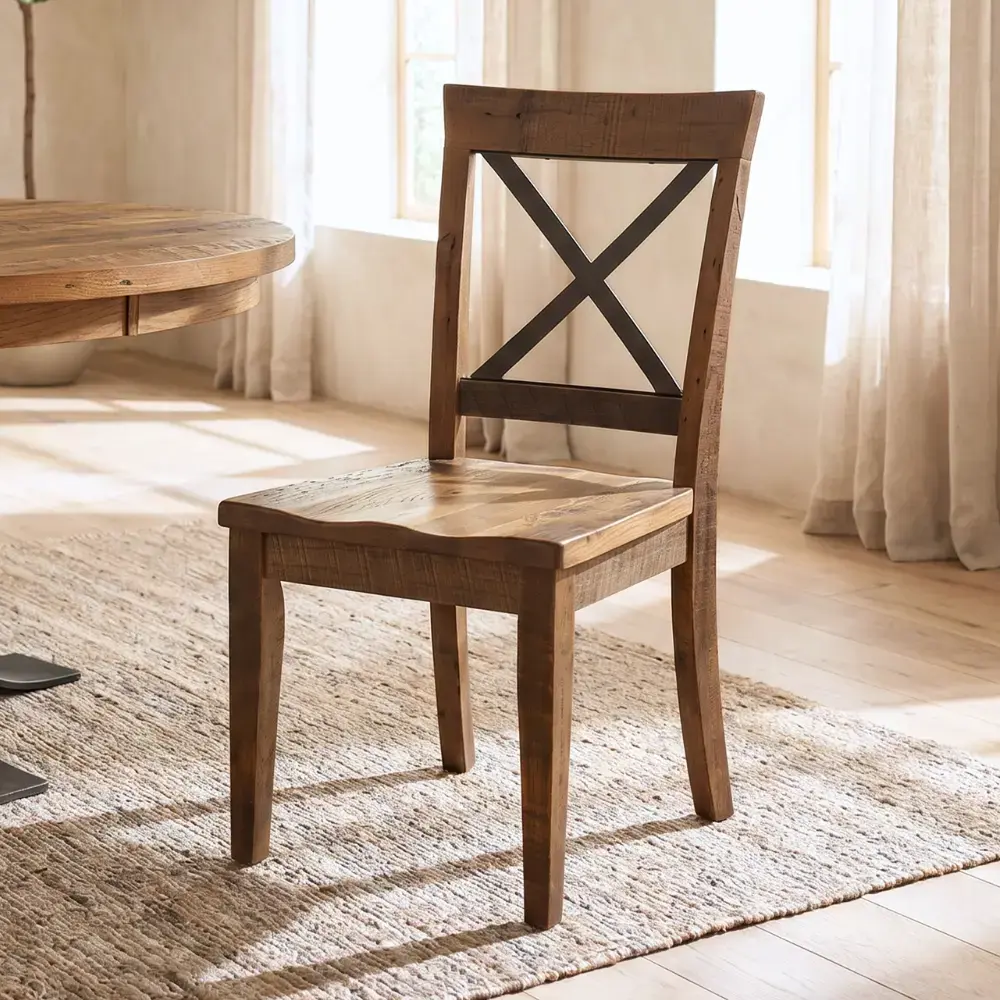
X-back chairs bring more visual structure to a dining room. The crossed-back design adds interest without requiring upholstery or elaborate detailing.
The Norway X-Back Chair combines reclaimed barnwood with a black powder-coated steel back. The mixture of natural wood and dark metal creates a strong focal point and works especially well with reclaimed tables, steel bases, black lighting fixtures, or other metal accents in the room.
Choose an X-back chair when you want:
A distinctive back design
A blend of wood and metal
Rustic-industrial character
Contrast around a simple wood table
Mission/Shaker Chairs: Clean and Timeless
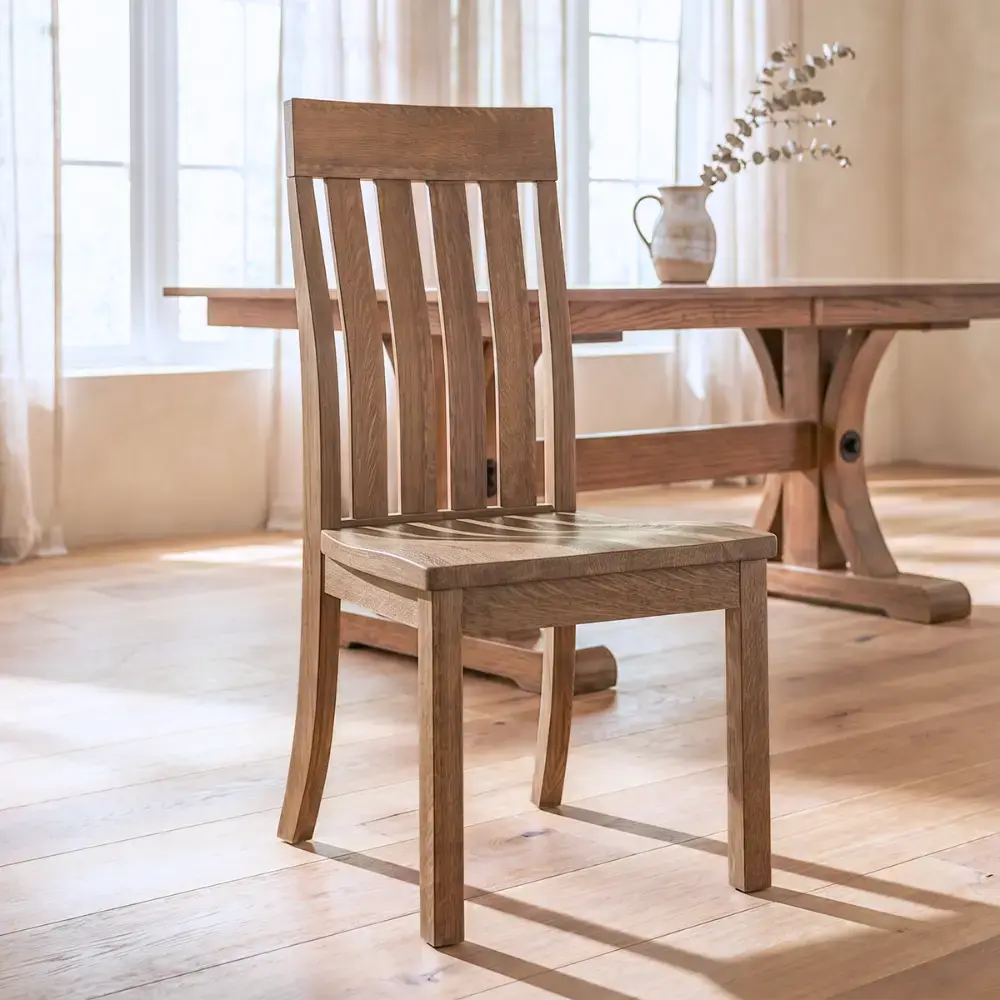
Vertical slat-back and Shaker-inspired chairs have a quieter, more streamlined appearance. Their simple lines allow the wood grain, finish, and craftsmanship to take center stage.
Styles such as the Barton, Walden, Aldon, and Liberty Slat Back are well suited to transitional, traditional, modern-rustic, and clean-lined interiors. Their open backs also help a room feel lighter, particularly when several chairs are placed around a large table.
Choose a Mission or Shaker-style chair when you want:
A clean, uncluttered silhouette
A lighter visual appearance
A versatile chair that can adapt as your style changes
A design that complements rather than competes with your table
Upholstered Chairs:
Comfortable and Polished
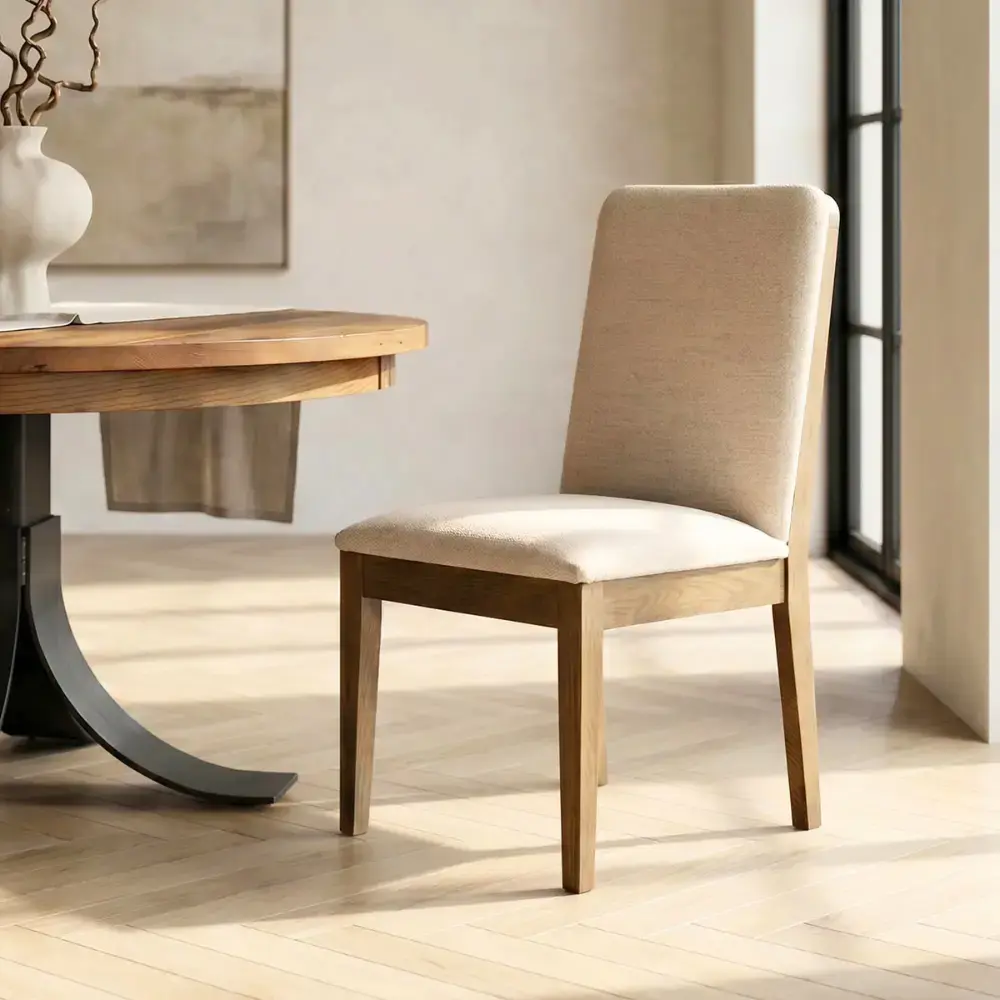
Upholstered dining chairs add softness, texture, and a more finished look to the room. They can make a large dining space feel warmer and can help a dining area transition naturally into an open-concept living room.
The Barrett Upholstered Cream Dining Chair combines a solid wood frame with soft upholstery, creating a chair that feels refined without being overly formal. Its neutral fabric can complement many table finishes and room colors.
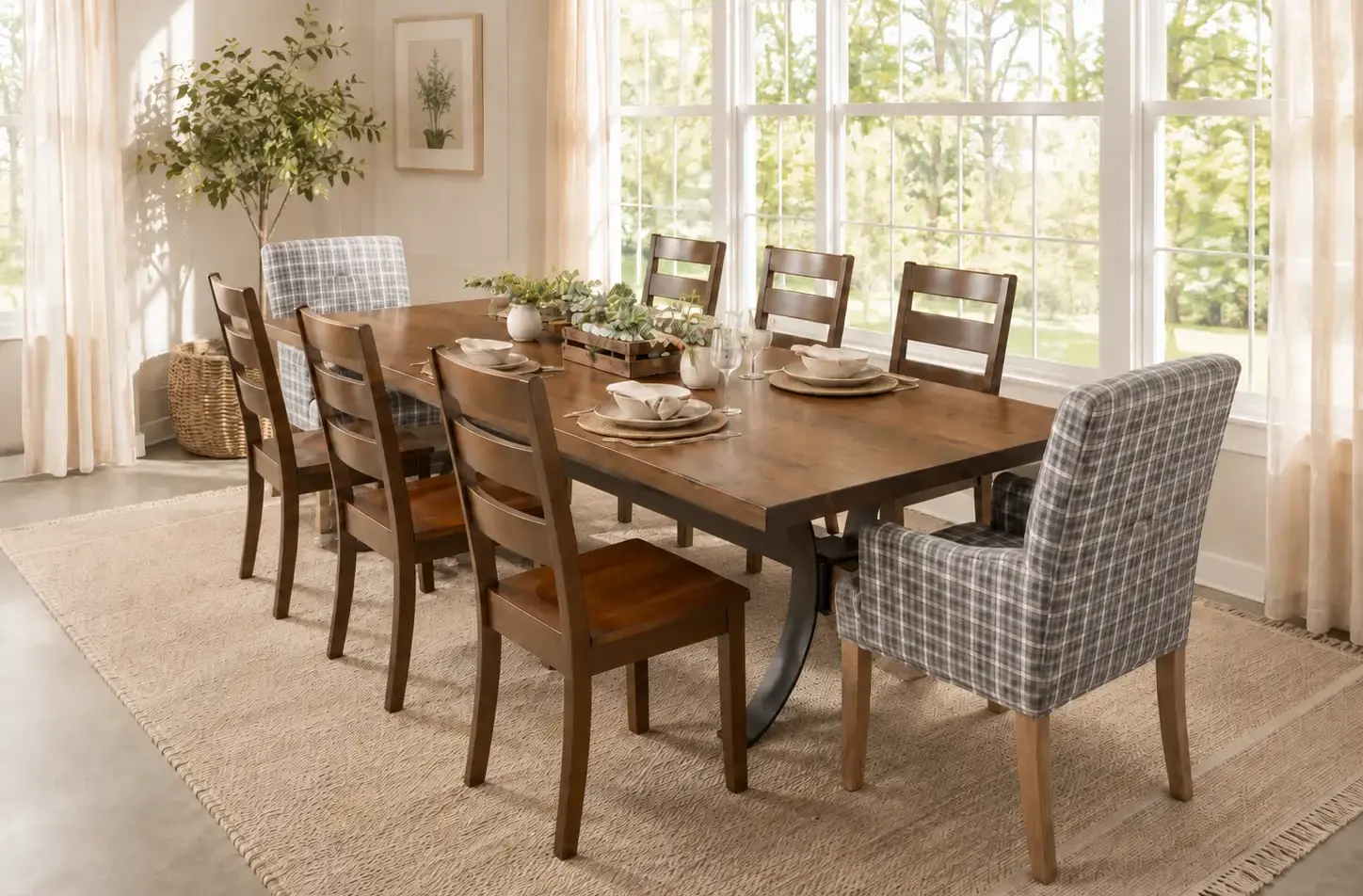
You can use upholstered chairs around the entire table or reserve them for the head and foot of a rectangular table.
Choose an upholstered chair when you want:
A softer, more layered dining room
A refined or transitional look
Texture and color beyond the wood finish
Should Your Chairs Match Your Table?
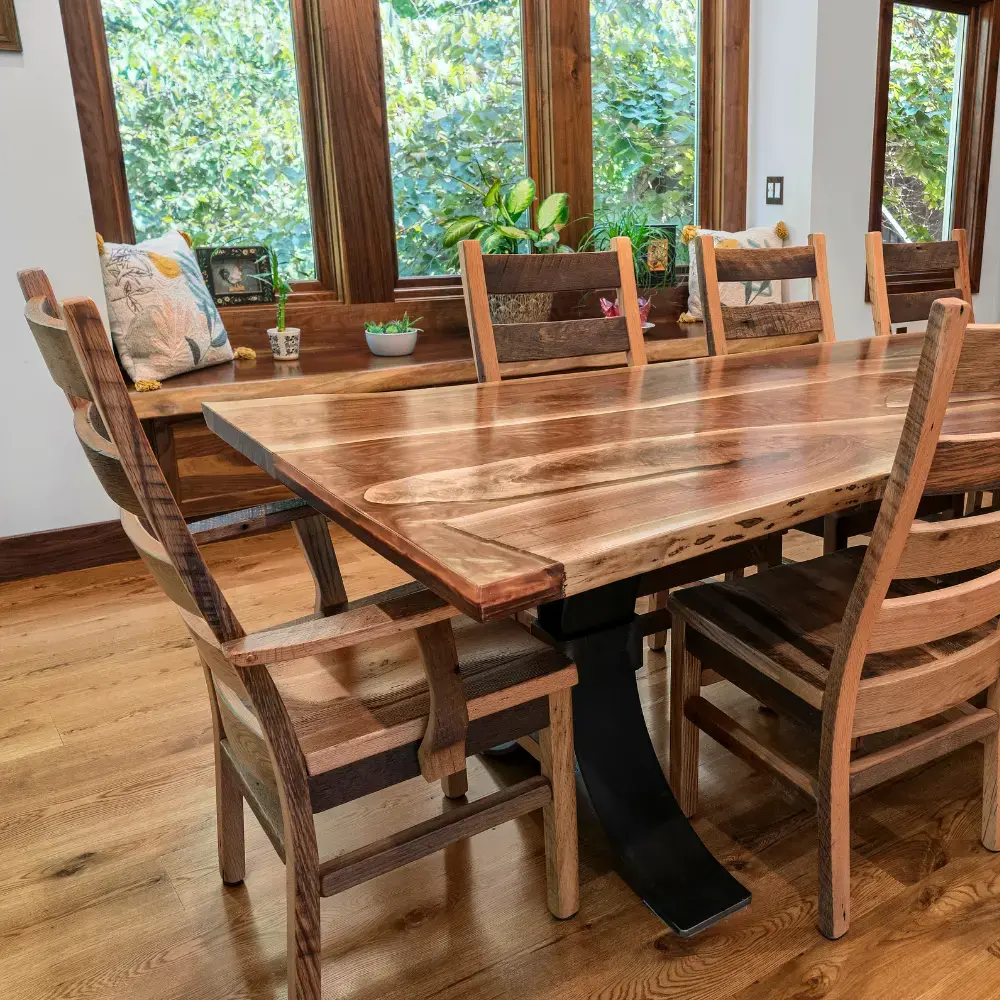
Your chairs and table do not need to come from the same wood type or finish.
In fact, a slight contrast often creates a more thoughtfully designed room.
The goal is coordination, not perfect duplication.
Look for one or two elements that connect the chairs to the table, such as:
Similar wood undertones
A repeated black metal detail
A shared finish color
Matching levels of distressing
Similar curves or straight lines
A consistent overall design style
For example, a smooth solid wood table can gain warmth and texture from ladder-back or barnwood dining chairs. A character-rich reclaimed wood table can be balanced with cleaner, simpler chairs.
When combining finishes, repeat each finish somewhere else in the room. Black chair details might connect to a chandelier or table base, while a lighter chair finish might relate to the flooring, buffet, or kitchen cabinetry.
Consider Mixing Armchairs and Side Chairs
Using armchairs at the ends of a rectangular table is a simple way to make the room feel more complete.
Armchairs create natural host seats and add visual importance to the ends of the table. The remaining side chairs can be slightly narrower, allowing you to seat more people without making the arrangement feel crowded.
You can keep the same chair design throughout the room or choose upholstered host chairs that coordinate with simpler wood side chairs.
Before ordering armchairs, check the height of the table apron and the position of the table base. The arms should fit comfortably beneath the tabletop, and the chair should slide in without hitting the apron, legs, or trestle.
Pair Chairs With Your Table Shape
The shape of your table can help guide your chair selection.
Rectangular Tables
Rectangular tables work with nearly every chair style. Ladder-back, X-back, Mission/Shaker-back, and upholstered chairs can all be good choices.
For a balanced look, place armchairs or upholstered chairs at the ends and coordinating side chairs along the length of the table.
Round Tables
Round tables often pair beautifully with curved-back or visually lighter chairs. Chairs without arms are usually easier to arrange around a round tabletop and can help maximize available seating.
Avoid chairs that are too wide or visually heavy, especially around a smaller pedestal table.
Square Tables
Square tables already have a strong geometric form. Simple Mission-style or lightly curved chairs can soften the arrangement without competing with the table.
For counter-height or pub-height tables, be sure to select seating made for the correct table height. The dining chair collection can be filtered to show which chairs are available with dining, counter, and pub-height options.
Don’t Overlook Dining Benches
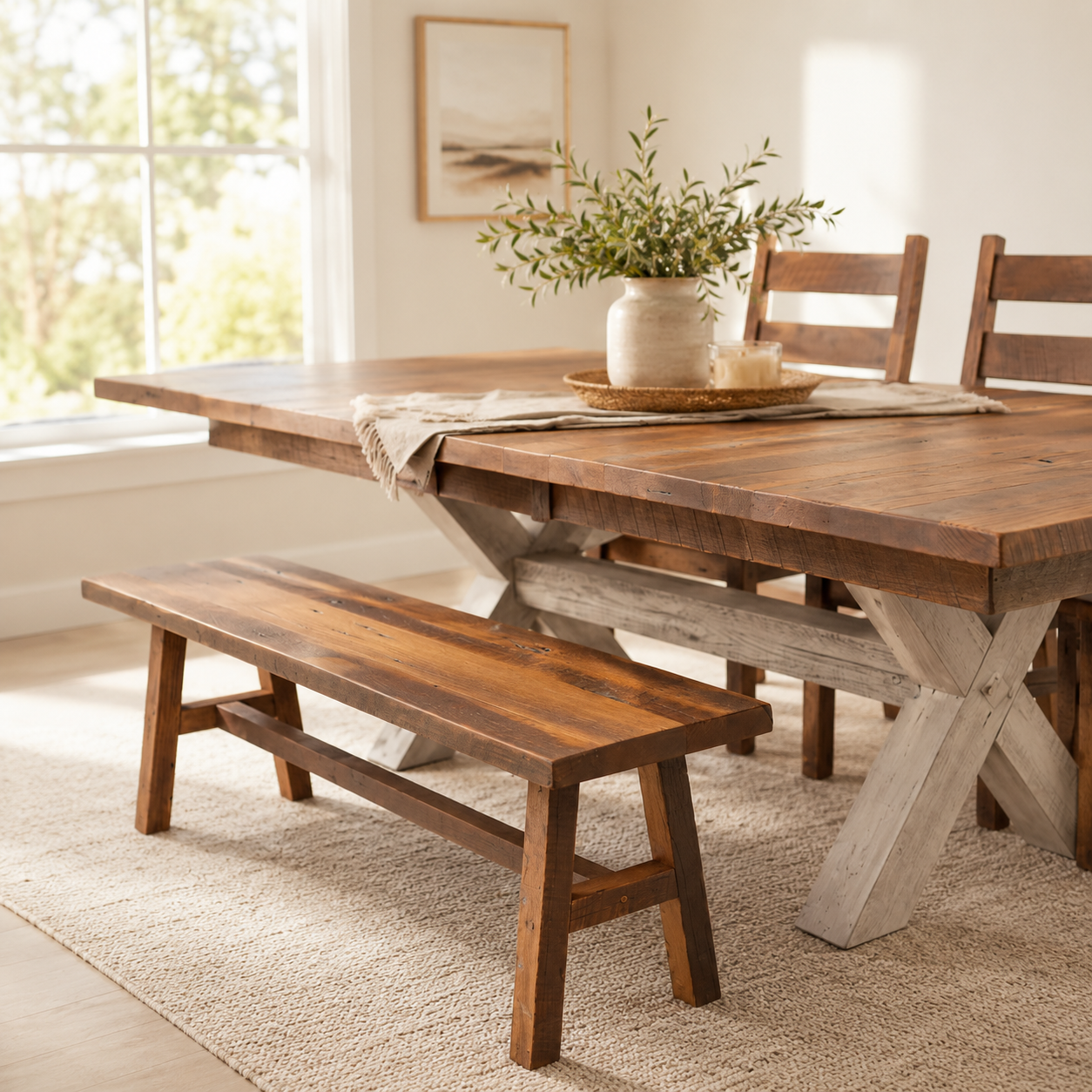
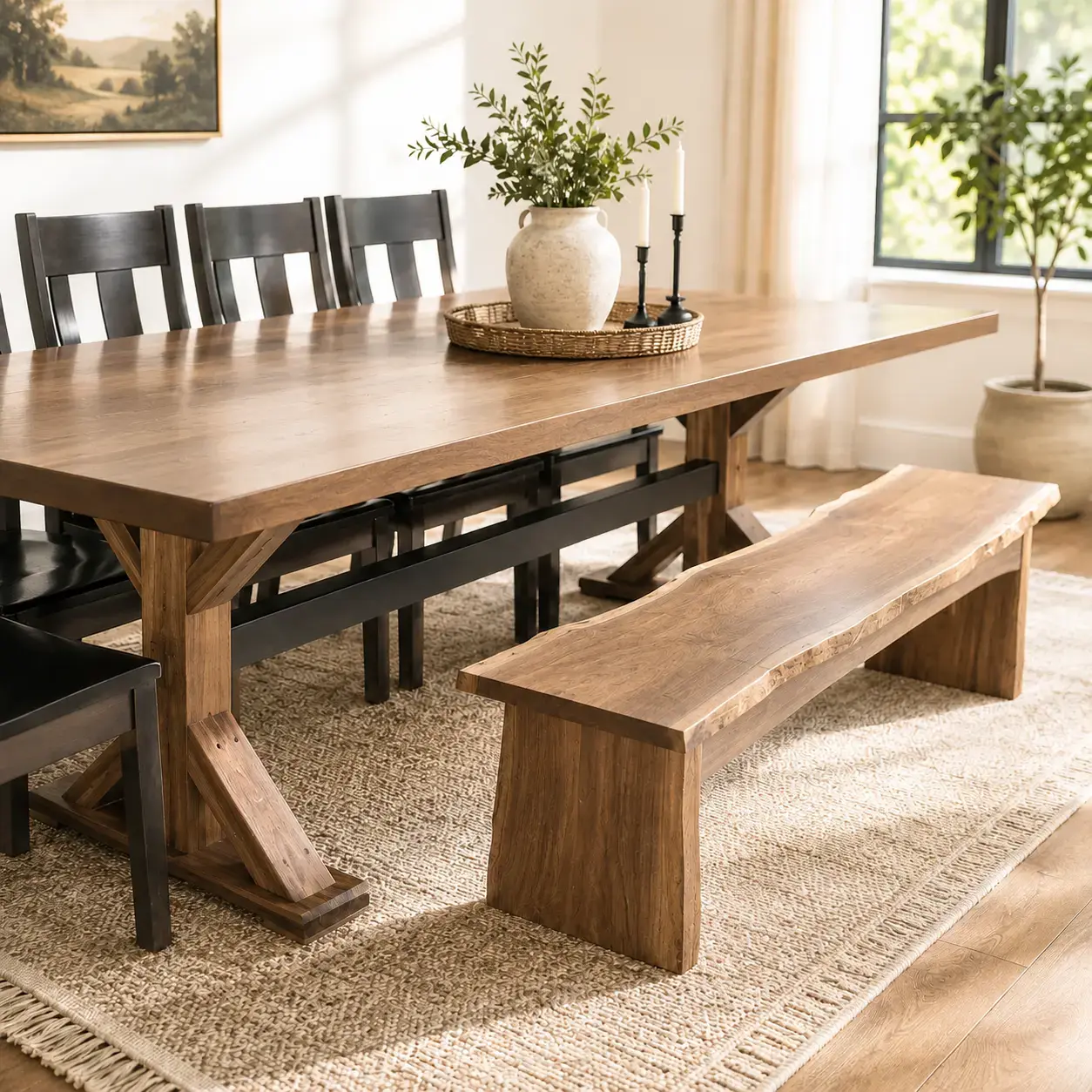
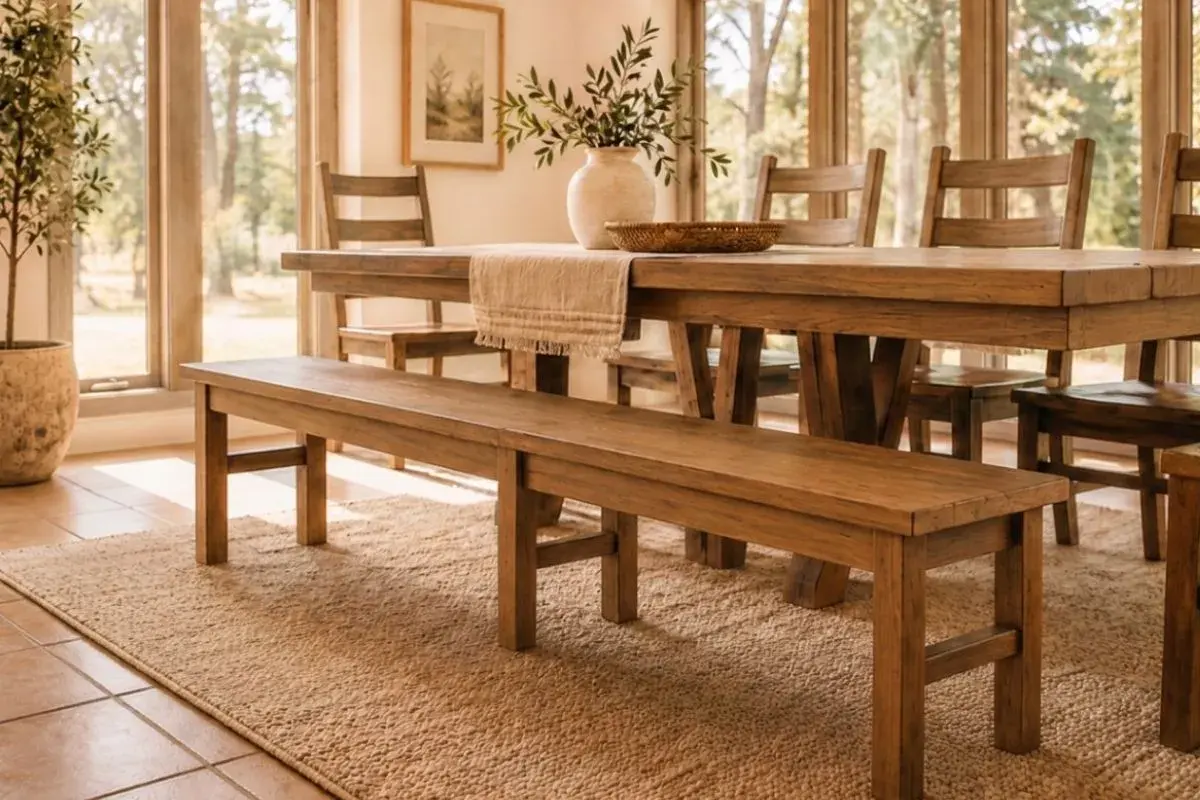
Dining benches offer a practical way to add more seating while giving the room a relaxed, welcoming feel.
They work especially well with rectangular tables and can make it easier to accommodate children, extra guests, or larger family gatherings.
A backless bench can often tuck beneath the table when it is not in use, helping the room feel more open and keeping walkways clear.
Benches with backs create a more substantial furniture look and may provide added support for longer meals.
For help determining the best bench size for your table, see our blog post, Determining Chair or Bench Sizes.
How to Pair a Bench With Dining Chairs
Your bench does not need to match every chair exactly. Instead, look for a shared detail that connects the seating, such as the wood species, finish, upholstery, leg shape, or level of distressing.
For a balanced arrangement, try:
-
A bench on one side with matching chairs on the other
-
A bench paired with armchairs at the ends of the table
-
An upholstered bench with simple solid wood chairs
-
A character-rich wood bench with cleaner, understated chairs
This combination creates a more collected look while keeping the dining space coordinated.
Think Beyond Today’s Decorating Trends
Dining chairs are used too often—and purchased too infrequently—to choose them based only on a temporary trend.
Look for quality construction, a supportive seat, durable finishes, and a silhouette you will continue to appreciate as your room changes.
A classic chair can take on an entirely different personality when made from another wood species or in a different finish. A darker stain may feel more formal, while a light natural finish can feel fresh and relaxed. Black accents add contrast, and upholstery brings softness.
Many Rustic Red Door dining chairs are built to order with choices including wood species, finishes, stain matching, armchair or side-chair configurations, and other customization options.
Create a Dining Room That Invites Everyone to Stay
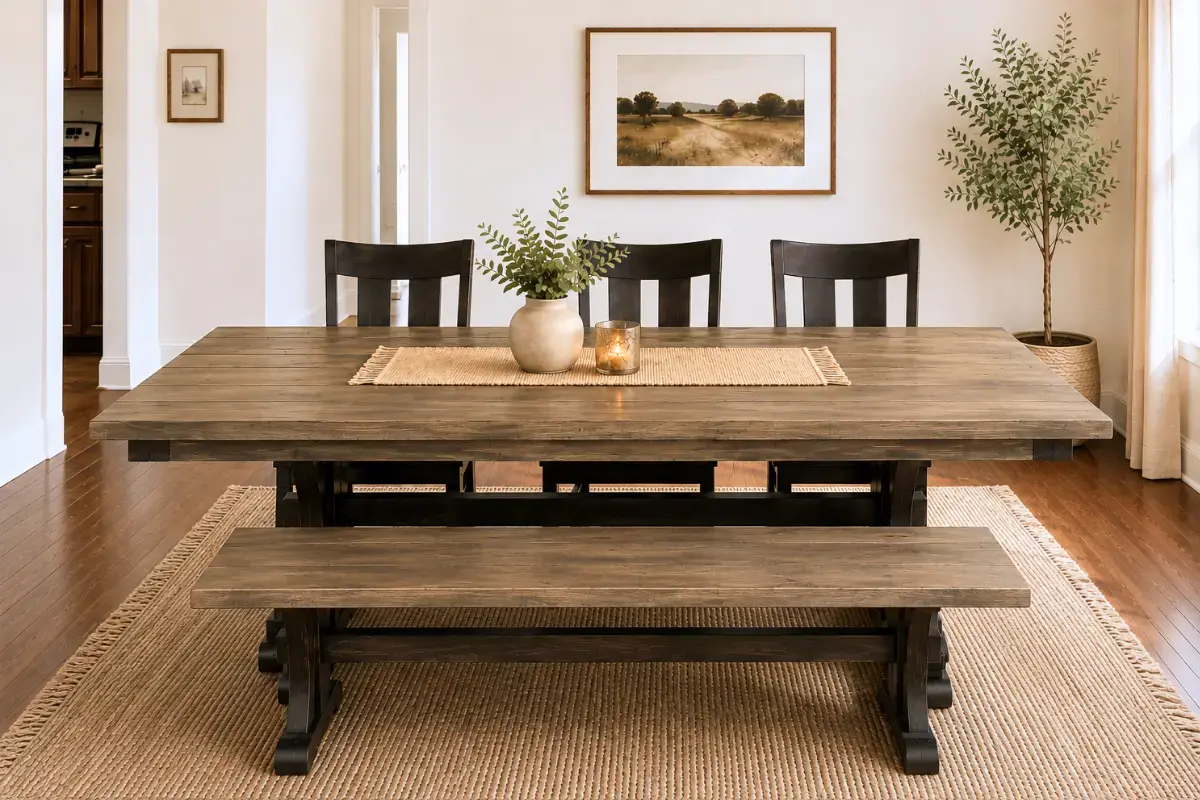
The right dining chairs should make your table look complete—but, more importantly, they should make people want to sit down.
One recent customer was hesitant to purchase chairs without trying them first because she was especially particular about comfort. We were confident enough in the design to assure her that she could reject the chairs upon delivery if they did not meet her expectations. That same day, two other customers tried the chairs in our showroom and were genuinely surprised by how comfortable they felt.-Shaun, Lead Designer
Consider how your family gathers, the amount of space around your table, the comfort you need, and the style you want the room to express. From warm reclaimed wood and familiar ladderbacks to clean-lined solid wood and softly upholstered seating, the right combination can turn your dining room into a place made for everyday meals, holiday celebrations, and conversations that last long after dinner.